When an importer asks about food authenticity, it usually wants a file tied to the batch rather than a single certificate: a product specification, traceability records, a recognised food safety certificate and an analysis report from an ISO/IEC 17025 accredited laboratory. Which analysis it wants depends on the product group and the buyer, so the method and laboratory should be settled at the quotation stage. Honey has its own rules, covered by Beevex; this article focuses on olive oil and spices and on how product groups differ.
What is the buyer really asking?
An authenticity request breaks down into four questions: is this the declared product, is it from the declared place, does this document belong to this batch, and is the supplier's system repeatable? Each document answers only some.
| Document | What it shows | What it does not show |
|---|---|---|
| Product specification | The agreed parameters and limits | That the delivered batch meets them |
| Food safety certificate (FSSC 22000, IFS Food, BRCGS) | That the site has an audited system | The composition of any single batch |
| Certificate of origin | The goods' non-preferential origin status | Composition or purity |
| Accredited laboratory report | The measured parameters in the sample tested | Additives not tested for, or that the sample represents the batch |
| Traceability record | Which inputs and links the batch passed through | That the product beside the record was not altered |
CBI's guides for nuts and spices say European buyers commonly expect a certificate recognised by the Global Food Safety Initiative. A site certificate says nothing about batch composition, though. We cover that distinction in what is product authentication.
Which analysis is requested for which product group?
| Product group | What buyers often ask about | Analysis and reference |
|---|---|---|
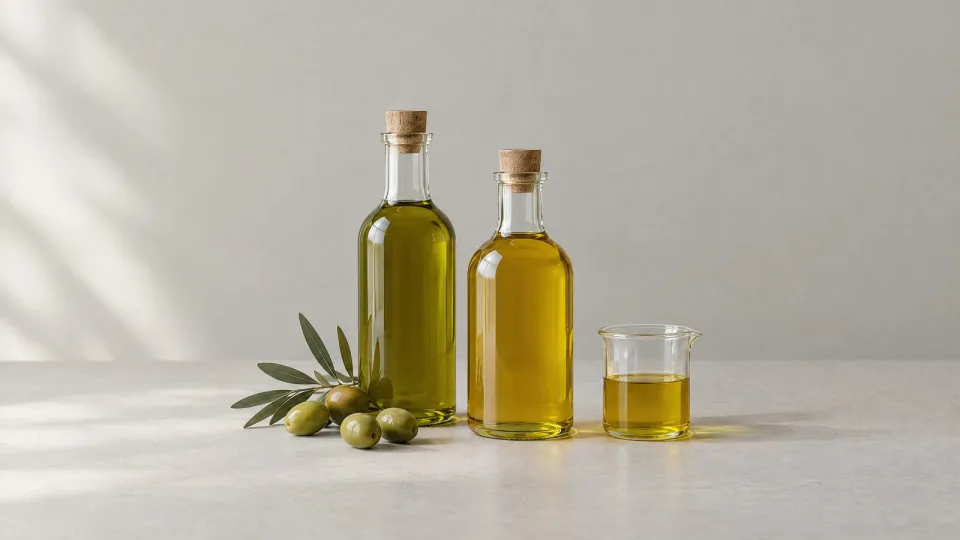
| Olive oil | Grade conformity, purity, batch records | In the EU, characteristics under Regulation (EU) 2022/2104 and methods under (EU) 2022/2105 |
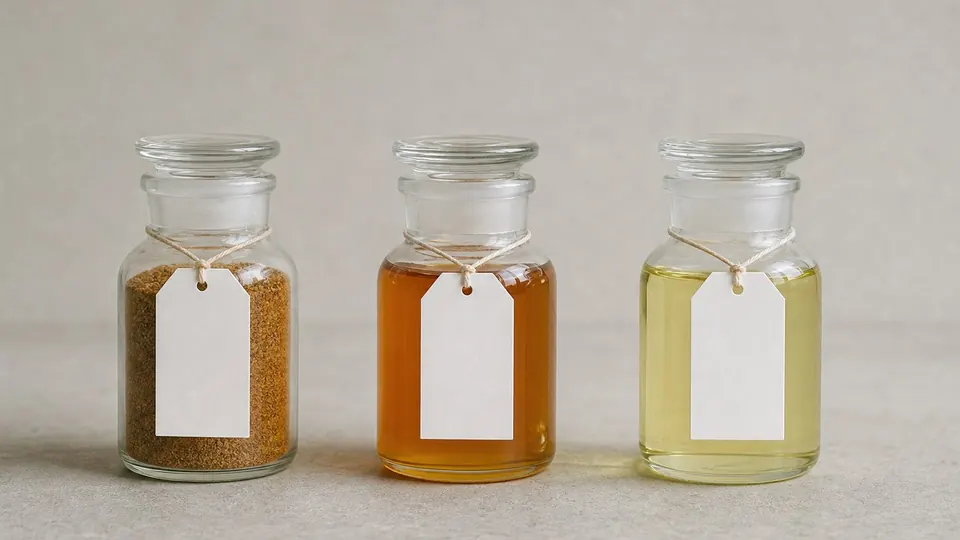
| Spices and dried herbs | Dyes, fillers, botanical substitution, residues and mycotoxins | ESA quality minima, Codex and ISO specifications, ISO/IEC 17025 report |
| Pistachios and nuts | Aflatoxin, residues, lot traceability | UNECE and Codex product standards, pre-shipment test results |
| Honey | Traceability from hive to pack, supplier samples | Directive 2024/1438 and the buyer's specification |
Where do olive oil disputes arise?
Implementing Regulation (EU) 2022/2105 tells member states to run conformity checks selectively, based on risk analysis, to verify that the oil marketed matches the declared category. It also requires operators, from the mill to the bottling stage, to keep entry and withdrawal registers by category. Its methods annex ties each characteristic to an International Olive Council method.
For a non-EU seller, an EU buyer's checks will look at these methods, so a report against a national standard should be compared with EU limits and methods as well. "Extra virgin" alone in a contract leaves the door open to dispute, so the contract should name the legislation or standard that applies. The control steps along the chain are covered in olive oil adulteration.
Why have spice buyers become stricter?
In the European Commission Joint Research Centre's 2021 EU-wide control plan, 17% of the 1,885 samples analysed were found suspicious. The rate reached 48% for oregano, 17% for pepper, 14% for cumin and 11% for both curcuma and saffron, and stayed at 6% for paprika and chilli. Non-authorised dyes were detected in 2% of spice samples. The report's word is "suspicious", which is not the same as confirmed fraud.
According to CBI's spice guidance, buyers often use the European Spice Association's quality minima as their reference, expect accredited laboratory documentation no older than six months, and suppliers are advised to agree the laboratory and test methods with the buyer. CBI's piece on fraud lists DNA analysis, isotopic techniques, mass spectrometry, spectroscopy and chemometrics among the methods in use.
How does the authenticity question arrive for nuts?
For pistachios, the question usually arrives through food safety. CBI's guide, updated in September 2026, says buyers expect a GFSI-recognised certificate and frequent laboratory testing, and may ask for official documents and test results before shipment, especially for Turkish and Iranian pistachios because of special EU border controls. It suggests linking each lot to orchard, farm, processor and test results.
The guide does not discuss fraud testing. If you claim species, origin or purity, ask the buyer which analysis would support it; an aflatoxin report does not answer those questions.
When does an analysis report actually help?
A report persuades a buyer when four conditions hold together:
- Link to the batch: the sample identity on the report matches the shipped batch number.
- Representativeness: how the sample was taken is clear and a retained sample is kept.
- Scope: the laboratory's accreditation scope covers that analysis. In Türkiye the laboratory also needs ministry approval for it; Law No. 5996 prohibits reports for analyses the laboratory is not approved for.
- Currency: the report's date falls within the period the buyer accepts.
Türkiye's Regulation on Food Control Laboratories classes a sample submitted for pre-export checks as a "private request sample". That report may satisfy the buyer, but it is not an official control result.
How should an export file be prepared?
- At quotation stage, ask the buyer for its specification and its accepted laboratories and methods.
- Build a traceability record from input to shipment for each batch.
- Measure raw materials before production and tie the result to the batch number.
- Take a representative sample from the shipment batch and keep a retained sample.
- For higher-risk products, add an authenticity analysis to the safety tests.
- Gather the origin certificate, certifications and reports into one batch file.
- Check the destination country's rules. Article 34 of Law No. 5996 makes room for a destination country's different requirements on export, but excludes products that endanger health from that flexibility.
No single analysis sees every form of fraud, so a file should rest on documents that corroborate each other.
Where does Deeptrace's measurement sit in the file?
Molevex compares a product's composition with a reference accepted as genuine and supports the content conformity a destination country or inspection body asks for with a measured record. Olivex and Beevex assess a batch on site ahead of packing and export. These records do not replace an accredited laboratory report; they help decide which batch goes for one. The place of a field result is covered in rapid test or accredited lab.
Sources
- CBI, What requirements must herbs and spices meet to be allowed on the European market?
- CBI, Fraud and adulteration in the European spice and herb sector, 21 September 2022
- CBI, Entering the European market for pistachios
- CBI, Stricter traceability requirements are taking over the European honey market, 17 October 2024
- European Commission Joint Research Centre, Results of an EU wide coordinated control plan to establish the prevalence of fraudulent practices in the marketing of herbs and spices, JRC126785, 2021
- Commission Implementing Regulation (EU) 2022/2105 on conformity checks of olive oil marketing standards and methods of analysis
- FSSC 22000 Certification Scheme
- Ministry of Trade of Türkiye, Origin FAQ, in Turkish
- Law No. 5996 on Veterinary Services, Plant Health, Food and Feed (Articles 33 and 34), in Turkish
- Regulation on Food Control Laboratories, Official Gazette, 18 February 2022, No. 31754, in Turkish