For food imitation or adulteration in Türkiye, a producer or importer faces an administrative fine of 1% of annual gross income on a first offence in 2026, with a floor of about TRY 474,000 and a ceiling of about TRY 4.74 million. The Ministry of Agriculture and Forestry gives the full 2026 range, across actors and repeat offences, as TRY 47,397 to TRY 18,963,571. On a second repetition within three years, producers and importers move to a judicial fine and a ban from the sector.
How much is the fine in 2026?
The sanction sits in Article 40(1)(l) of Law No. 5996. The calculation is set out in the Regulation on Imitation and Adulteration in Food and Feed and the Calculation of Administrative Fines, published on 16 April 2021.
| Actor | First offence | First repetition within three years | Second repetition within three years |
|---|---|---|---|
| Producer or importer | 1% of income; about TRY 474,000 to 4.74 million | 1% of income; about TRY 948,000 to 9.48 million | Judicial fine of 1,000 to 3,000 days and a 5 to 10 year ban from the sector |
| Operator marketing under its own name or trade name | 1% of income; about TRY 474,000 to 4.74 million | 1% of income; about TRY 948,000 to 9.48 million | 1% of income; about TRY 1.9 million to TRY 18,963,571 |
| Retailer marketing without ensuring traceability | 1% of income; TRY 47,397 to about 4.74 million | Repeat-offence rules of the Misdemeanours Law | Repeat-offence rules of the Misdemeanours Law |
Here is where the figures come from. TRY 47,397 and TRY 18,963,571 are the two ends of the 2026 range published by the ministry. The first-offence range of TRY 474,000 to 4.74 million comes from a February 2026 statement by the Deputy Director General of Food and Control. The steps between are calculated from the law's doubling rule and the ratios in the regulation. Floors and ceilings are updated at the start of every calendar year by the revaluation rate, so the applicable amount should be checked against the date of the act and the decision.
How is the fine calculated?
Articles 5 and 6 of the regulation set the calculation:
- Income base: annual gross income at the end of the financial year before the act. If that cannot be calculated, the financial year end closest to the act.
- What counts as gross income: for balance-sheet taxpayers, gross sales minus sales deductions. For operating-account taxpayers, period revenue.
- Limits: if 1% falls below the floor, the floor applies; if it exceeds the ceiling, the ceiling applies.
- New businesses: where income cannot be established, for example because trading has just begun, the fine is set at the floor.
What else happens besides the fine?
The fine is often the most visible consequence, but rarely the only one:
- Product: under Article 40(1)(l) the product is seized and recalled at the responsible party's expense. Product that cannot be used outside the market is destroyed; product that can be has its ownership transferred to the state.
- Public disclosure: company, brand, product and batch details are published on the ministry's list. The process is covered in how the Turkey food fraud list works.
- Health risk: where the food endangers life and health, Article 40(1)(a) applies instead, with 1 to 5 years' imprisonment and a judicial fine of 1,000 to 5,000 days. A repeat within three years adds a 5 to 10 year ban from the sector.
- Declaration mismatch: a mismatch between the label and the product's content and analytical values is separately sanctioned under Article 40(1)(k).
Fines are payable within thirty days. Article 27 of the Misdemeanours Law provides for an application to the criminal judgeship of peace within fifteen days of notification. Under Article 5 of the regulation, filing a case does not stop the repeat-offence rules from applying.
What does each actor answer for?
| Actor | Duty | Point to watch |
|---|---|---|
| Producer | Compliance, verification, records, traceability (Articles 22 and 24) | When a raw material problem carries into the finished product, the producer answers for it |
| Importer | Liability on the same footing as the producer | What happens in a foreign supplier's tank lands in the importer's file |
| Own-label operator | Liability for product marketed under its name, even if made under contract | A contract manufacturer's declaration does not transfer that liability |
| Retailer | Ensuring traceability, following official measures | The sanction text targets marketing without ensuring traceability |
Article 22 also requires operators who consider a product fails food safety conditions to start withdrawal immediately and inform the ministry. The duty to keep records up to date and hand them over on request sits in the same article.
Is "I didn't know" enough?
Saying the problem came from a supplier does not remove the sanction by itself. Article 40(1)(l) addresses the operator who produces, imports or markets under its own name, and its text contains no "knowingly" condition. The regulation also states that operators are responsible for the compliance of what they produce, import and market under their own name.
Batch-level measurement records help elsewhere:
- They show which batches are affected and help define the scope of a recall.
- They document the verification the law expects.
- They support contractual claims against a supplier, which needs intake records and a retained sample together.
- They give substance to the facts presented when challenging an administrative sanction.
How much weight a record will carry in a given case cannot be predicted in advance. That assessment belongs with legal counsel.
Will the amounts rise?
In February 2026 a ministry official said a new legislative amendment that would raise the upper limits was in preparation. In the current text of the law, Article 40(1)(l) still stands as introduced by Law No. 7255 in 2020; the most recent amendment, Law No. 7584, touched other articles. Watch for the new provisions and the 2027 revaluation towards year end.
Where do measurement records fit?
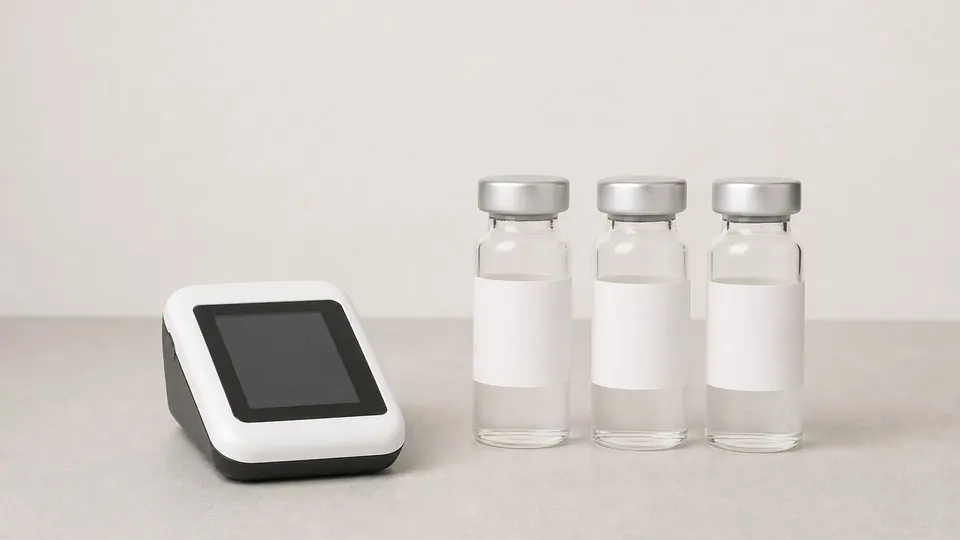
Deeptrace's Molevex, Olivex and Beevex measure raw materials and bulk product before they enter a blend and record the result with the batch number. That record neither removes a sanction nor replaces official analysis. Its use is keeping a problem batch out of the chain and directing suspect batches to the laboratory. For what a field result is worth, see rapid test or accredited lab.
Sources
- Law No. 5996 on Veterinary Services, Plant Health, Food and Feed (Articles 22, 24, 40 and 42), in Turkish
- Regulation on Imitation and Adulteration in Food and Feed and the Calculation of Administrative Fines, Official Gazette, 16 April 2021, No. 31456, in Turkish
- Ministry of Agriculture and Forestry, Food: public disclosure work, in Turkish
- Misdemeanours Law No. 5326 (Articles 17 and 27), in Turkish
- Türkiye Gazetesi, statement by the Deputy Director General of Food and Control on the 2026 fine range, 11 February 2026, in Turkish